Trading Magazine
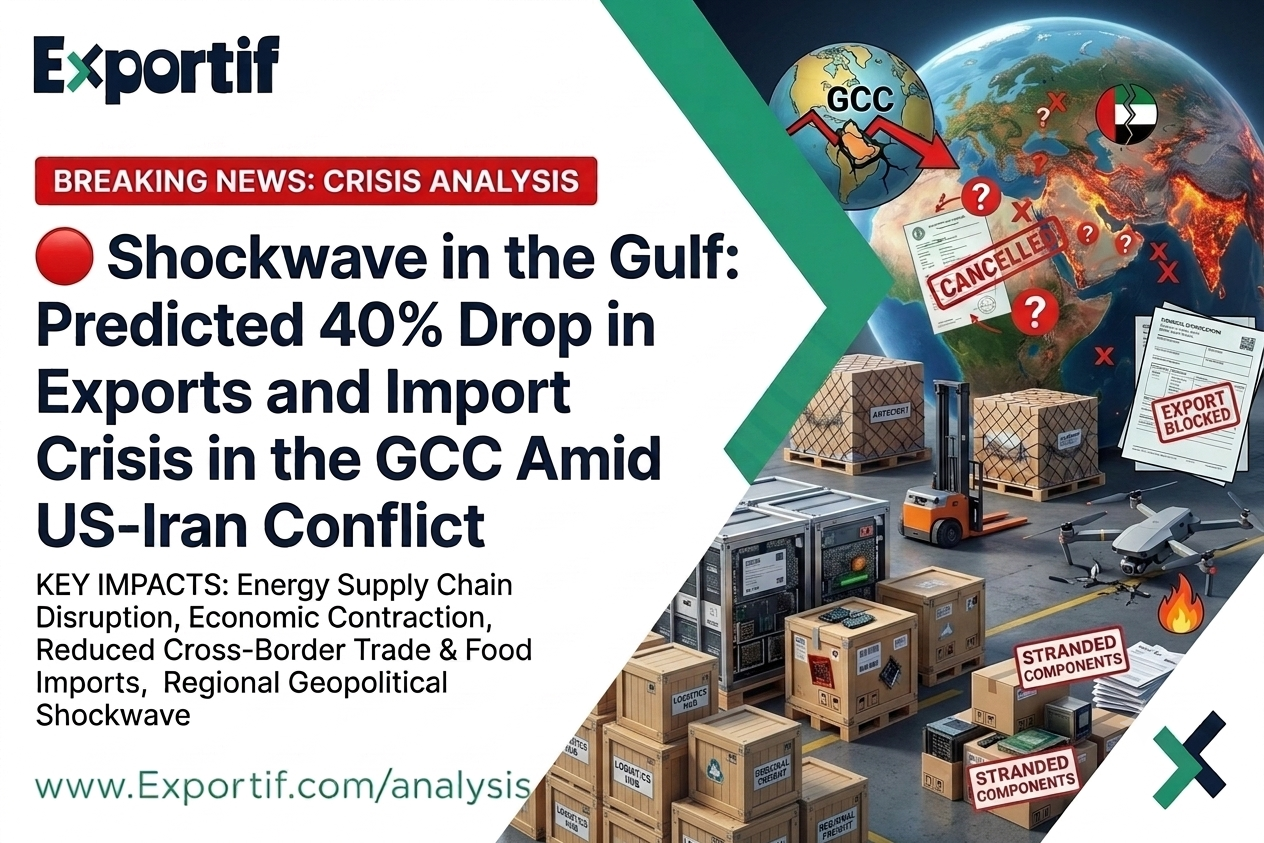
🔴 Shockwave in the Gulf: Predicted 40% Drop in Exports and Import Crisis in the GCC Amid US-Iran Conflict

Iran-US Conflict GCC Economy: 5 Alarming Trade Impacts
An Iran-US conflict would strike far beyond regional politics — it would paralyze the economic arteries of the Middle East. This analysis evaluates the projected statistics on declining exports, supply chain disruptions, and the broader macroeconomic fallout for the GCC economy, covering all six Gulf Cooperation Council (GCC) nations.
Introduction: The Gulf at an Economic Epicenter
The members of the Gulf Cooperation Council — Saudi Arabia, the UAE, Qatar, Kuwait, Bahrain, and Oman — sit at the heart of global energy and transit networks. Positioned between Iran and key US military installations, their ambitious economic diversification initiatives, such as Saudi Vision 2030, face immediate exposure to any escalation. Economic models consistently show that an Iran-US conflict would quickly erode the trade gains the GCC economy has built over the past decade, reversing years of diversification progress in a matter of weeks.
Iran-US Conflict and GCC Export Contraction: Disruption at the Strait of Hormuz
The most immediate shock of an Iran-US conflict would hit the GCC’s export sector, which relies heavily on maritime traffic through the Strait of Hormuz.
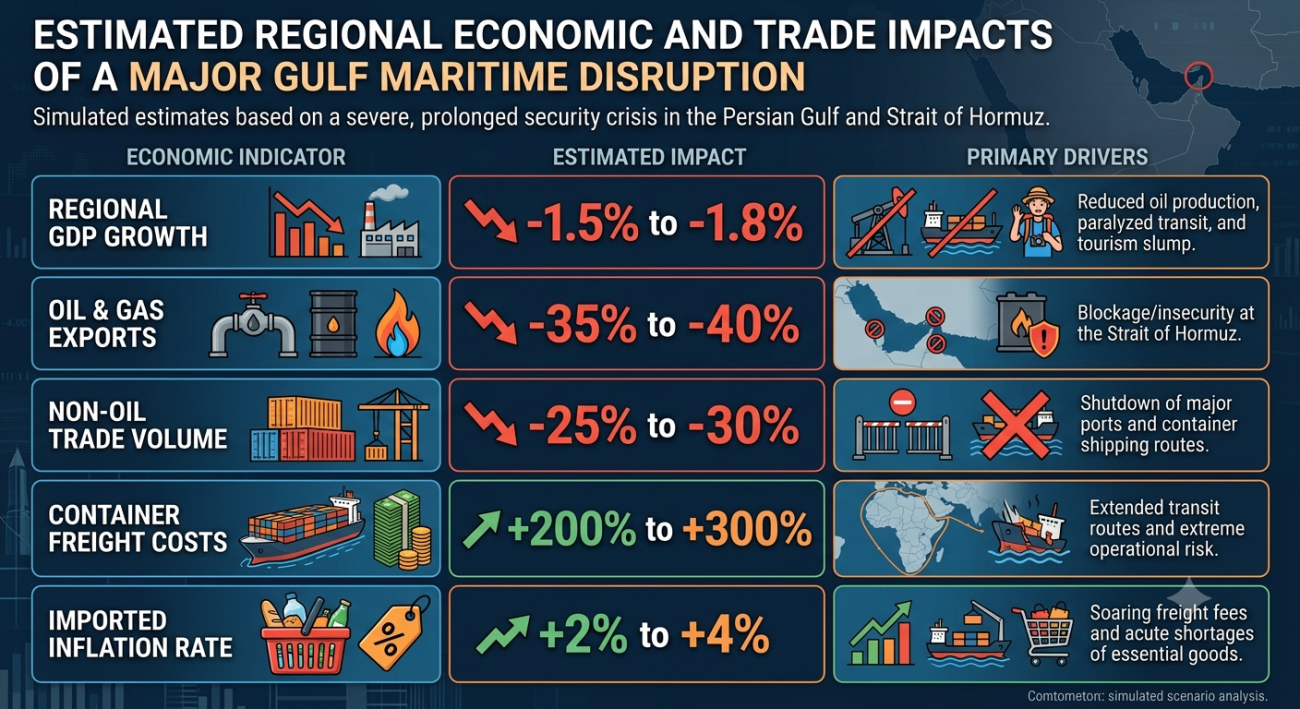
- 35% to 40% Drop in Oil & Gas Exports: Roughly 20 million barrels of oil and 20% of global Liquefied Natural Gas (LNG) pass through the Strait of Hormuz daily, according to the U.S. Energy Information Administration. Should this choke point become insecure or blocked, maritime energy exports from the GCC could fall by up to 40%. Bypass pipelines in Saudi Arabia and the UAE lack the capacity to absorb this volume completely.
- 25% to 50% Decline in Non-Oil Exports: Exports of petrochemicals, aluminum, and chemical fertilizers from hubs in the UAE and Bahrain would stall due to suspended container lines and restricted maritime navigation.
How the Iran-US Conflict Threatens GCC Imports: Skyrocketing Costs and Shortages
With the GCC importing over 85% of its food and basic commodities, any disruption to maritime supply chains during an Iran-US conflict creates immediate vulnerabilities for the wider GCC economy.
- 20% to 35% Fall in Import Volume: Port blockades and rerouted shipping lines would severely restrict cargo arriving at primary regional hubs, including Jebel Ali (Dubai) and Hamad Port (Qatar).
- 250% Surge in Freight Rates: Freight charges per container from major hubs in Europe and Asia to the Gulf could jump from an average of $2,500 to over $8,000–$9,000, a trend already tracked by shipping indices such as the Freightos Baltic Index.
- 10-Fold Spike in War Risk Insurance: International underwriters, guided by bodies like Lloyd’s Market Association, would likely cancel standard coverage and raise War Risk Insurance premiums up to tenfold, making private-sector imports economically unviable.
Macroeconomic Consequences of an Iran-US Conflict for the GCC Economy
- Threat to Food Security: Restricted shipping lanes would force reliance on strategic food reserves and costly air-freight alternatives.
- Severe Hit to Regional Hubs: Dubai, a global re-export center, and Qatar, the world’s leading LNG exporter, would see significant infrastructure idling and revenue contraction.
- Shift in Global Trade Routes: Prolonged instability would push major energy buyers — China, India, and Japan — toward alternative suppliers in Africa, Russia, and the Americas, threatening the GCC’s long-term market share. The International Monetary Fund has flagged similar route-diversification risks in past Middle East disruption scenarios.
Conclusion
An Iran-US conflict would extend far beyond conventional warfare, fundamentally disrupting the GCC economy through sharp export reductions, inflated import costs, and supply chain paralysis. This economic exposure underscores why GCC member states continue to prioritize diplomatic de-escalation over regional confrontation — the cost of conflict, measured purely in trade terms, would be severe and long-lasting.